Niche vs Indie Perfume: Who Really Owns Your Luxury Scent?
Picture two bottles at roughly the same price on the same shelf. One comes from a house owned by a global group with dozens of brands in its portfolio. The other was blended by hand in a small studio by a perfumer who owns the house outright. Both are sold as niche perfume, yet the stories behind them could hardly be more different.
Here we unpack niche vs indie perfume with a definition you can actually test: who owns the house, who writes the formula, what genuinely changes in the bottle you buy, and how to choose between the two worlds with your eyes open.
Where did the word niche come from?
When Jean Laporte founded L'Artisan Parfumeur in Paris in 1976, the idea was perfume built around striking materials, outside the logic of fashion houses; its first releases arrived in 1978 with names like Vetiver, Vanilia and Mûre et Musc [2]. That is niche in its original sense: perfume for a small circle of connoisseurs, made by a perfume house rather than a couture label, sold in very few places.
In 2000 Frédéric Malle turned the table with a publishing house for perfume. He printed the perfumer's name on bottle and box the way an author appears on a book cover, and cast himself as editor rather than composer [3]. From then on, a serious buyer started asking who wrote the scent, and the perfumer's name became part of the bottle's value.
When the big groups bought niche
Niche success attracted serious money. Within roughly a decade, the best-known houses moved from their founders to global beauty and fashion groups, often less than ten years after launch:
House | Founded | Moved to | Deal year |
|---|---|---|---|
Le Labo | 2006 | Estée Lauder | 2014 [4] |
Frederic Malle | 2000 | Estée Lauder | announced 2014, closed 2015 [5] |
Kilian | 2007 | Estée Lauder | 2016 [6] |
Maison Francis Kurkdjian | 2009 | LVMH (majority) | 2017 [7] |
Penhaligon's & L'Artisan Parfumeur | — | Puig | 2015 [9] |
Byredo | 2006 | Puig (majority) | 2022 [8] |
Creed | — | Kering, then L'Oréal | 2023, then 2026 [10][12] |
The Creed deal alone was reportedly valued at around 3.5 billion euros [11], and in March 2026 the house moved again, with the whole of Kering Beauté, to L'Oréal [12]. The upshot: niche today describes a perfume's position in the market — price, distribution, style — not who owns it.
That is not a flaw. A group-owned house gains production consistency, wider availability and access to top perfumers and materials. But it also enters portfolio logic: launch calendars, growth targets, and decisions sometimes taken far from the lab.
So what is an indie house? A testable definition
The most precise working definition we know comes from the Art and Olfaction Awards, founded in 2013 by a Los Angeles non-profit, because it had to set rules on who may enter [1]:
- Ownership, for everyone: the house is privately owned, or belongs to a private company holding no more than four fine-fragrance brands [1].
- Independent: the brand hires an outside perfumer or fragrance company to write the formula, then releases it under its own name [1].
- Artisan: the brand's primary perfumer owns at least 35% of it and creates the formula in-house [1].
By that yardstick the picture sharpens: Le Labo and Byredo are niche houses, but no longer indie, because they sit inside a group portfolio. Indie itself comes in two shades: a visionary owner who chooses the perfumer, or a perfumer who owns the house and blends by hand.
Did you know?
The four-brand ceiling means a small, creative house can drop out of the independent definition the moment a large group buys it [1].
The juice in the bottle may stay the same while the house's status flips from independent to group-owned with a single signature.
Living examples on Loja's shelves
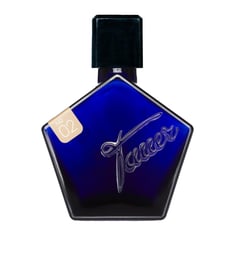
Artisans (the perfumer is the owner): Andy Tauer, a Swiss chemist and self-taught perfumer, launched his house in 2005 with L'Air du Désert Marocain. Hiram Green, Canadian-born and working in the Netherlands, composes with fully natural materials in small batches; Moon Bloom was his debut in 2013. Thomas Kosmala likewise signs every scent in his house himself.
Independents (the house chooses its perfumer): Perris Monte Carlo is a family house that works with leading perfumers, among them Jean-Claude Ellena for Jasmin de Pays. Masque Milano is run by its two founders as editors who cast a perfumer for each chapter of their collection. The vision belongs to the owner; the pen belongs to the perfumer.
Tauer — 02 L'Air du Désert Marocain 50ml
The clearest case of artisan perfume: a chemist who composed his house's first scent himself. Coriander, cumin, dry amber and cedar, like a desert at dusk.
Thomas Kosmala — No.4 Après l'Amour Elixir 100ml
A perfumer whose own name is on the bottle. Almond, jasmine, lemon zest and bitter orange with a close-to-skin character.
Perris Monte Carlo — Jasmin de Pays 100ml
The independent model: a family house that chose a first-rank perfumer. Jasmine, marigold, clove and musk in a transparent, signature style.
What actually changes in the bottle?
1. Access to captive molecules
Large fragrance companies such as Givaudan, Firmenich and IFF keep patented aroma molecules for their own perfumers; these are called captive odorants [13]. One Givaudan example is Akigalawood, a spicy wood with patchouli and agarwood facets [14].
A niche house that commissions a perfumer from one of these companies may reach those tools. An artisan who buys materials on the open market works with what is commercially available, until a patent nears its end and the molecule is released, as happened with Hedione, which appeared in Eau Sauvage in 1966 [13]. We touched on this in our article on how perfumes are cloned.
2. Small batches and natural materials
Artisan houses tend to produce in small batches, and some rely heavily or entirely on naturals, as Hiram Green does. Natural materials vary from harvest to harvest, so you may notice slight differences between batches; that is part of the character, not a defect.
3. The same law for everyone
Independence does not mean no oversight. In the European Union no cosmetic product, perfume included, may be placed on the market without a responsible person, a safety assessment and written report beforehand, a product information file and prior notification [15]. Those rules apply to the smallest studio exactly as to the largest group.
4. Availability and continuity
A large group distributes worldwide and keeps a release alive for years. A small house produces less, and restocks can take time, so when you find the indie scent that feels like you, it is wise not to wait too long. That is a fact of production, not a limited-edition pitch.
Group-owned niche or indie? How to choose
If you want… | Closest match | Why |
|---|---|---|
A scent you can rebuy with the same character | Group-owned niche | Large production and global distribution |
A great perfumer's signature, carefully directed | Publisher-style niche or independent | The owner matches the perfumer to the idea |
A bold personality unlike the market | Artisan | One decision-maker between idea and bottle |
A gift for a connoisseur who knows every name | Independent or artisan | Less likely they own it, and a story to tell |
A high share of naturals | Specialist artisan | Small batches, chosen materials |
You don't need to pick one camp. A mature fragrance wardrobe holds both: a scent from a big house you trust to be consistent, and one from an independent perfumer whose story you can tell. We covered that step in our guide to building a fragrance wardrobe.
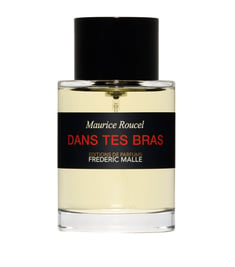
Frederic Malle — Dans Tes Bras 100ml
From the house that put the perfumer's name on the bottle, now part of Estée Lauder. Maurice Roucel's signature: violet, heliotrope, cashmere woods and musk.
Masque Milano — Mandala 100ml
An independent house led by two editors. Olibanum, nutmeg, cardamom, myrrh and sandalwood, close to the Gulf's incense memory with an Italian accent.
For lovers of pure naturals, Hiram Green's Moon Bloom is a rare tuberose, jasmine and coconut experience, while Le Labo's Bergamote 22 shows a niche house born independent that later joined a major group.
FAQ
Is every niche perfume an indie perfume?
No. Niche describes market position; indie describes ownership. Many famous niche houses now belong to groups such as Estée Lauder, Puig, LVMH and L'Oréal.
Are indie perfumes better than group-owned niche?
Not necessarily. The difference lies in style, availability and who makes the decisions. Choose by taste and by what you want from the scent.
What separates an independent house from an artisan one?
An independent hires an outside perfumer; an artisan's perfumer owns at least 35% and blends in-house, per the Art and Olfaction Awards.
Does a perfume change when a big group buys the house?
Not automatically. Changes usually come from reformulation, shifting materials or regulation, the subject of our article on perfume reformulation.
The takeaway
Niche tells you where a perfume stands in the market; indie tells you who stands behind it. Know both, and you buy with understanding rather than by label.
Explore niche brands and independent houses at Loja. Every price includes shipping, customs and tax, every bottle is authentic, and every order is packed with thermal insulation.
Sources
- The Institute for Art and Olfaction — 2024 Art and Olfaction Awards Fact Sheet — artandolfaction.com
- Wikipedia — L'Artisan Parfumeur — en.wikipedia.org
- Wikipedia — Frédéric Malle — en.wikipedia.org
- The Estée Lauder Companies — Completes Acquisition of Le Labo (2014) — elcompanies.com
- The Estée Lauder Companies — To Acquire Editions de Parfums Frédéric Malle (2014) — elcompanies.com
- The Estée Lauder Companies — Acquires By Kilian (2016) — elcompanies.com
- LVMH — Maison Francis Kurkdjian joins the LVMH Group (2017) — lvmh.com
- Puig — Puig acquires a majority stake in Byredo (2022) — puig.com
- Puig — History — puig.com
- Kering Beauté completes the acquisition of Creed (2023) — globenewswire.com
- FashionUnited — Kering's acquisition of Creed reportedly valued at 3.5 billion euros (2023) — fashionunited.uk
- L'Oréal — Completes acquisition of Kering Beauté (31 March 2026) — loreal-finance.com
- Wikipedia — Captive odorant — en.wikipedia.org
- Givaudan — Elevating fragrance creation with bespoke unique ingredients — givaudan.com
- Regulation (EC) No 1223/2009 on cosmetic products (Articles 4, 10, 11, 13) — eur-lex.europa.eu