Building a Fragrance Wardrobe: Why One Perfume Is Never Enough
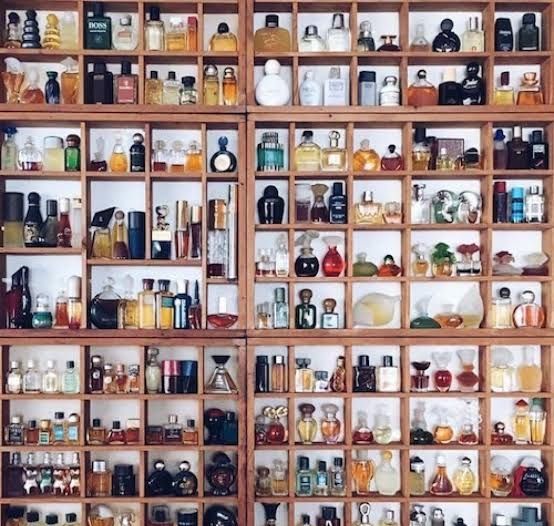
You buy the perfume you loved from the first spray. You wear it for weeks. Then one morning you spray it and smell almost nothing, while a colleague leans over to ask what you are wearing. The perfume has not weakened. Your nose has changed. That paradox alone explains why perfume lovers keep a fragrance wardrobe rather than a single bottle, and why anyone who wants to keep enjoying their scent needs one too.
In this guide we walk the road step by step: what smell science says about getting used to a perfume, how scents are grouped into families, what Gulf heat does to the notes, and why your nose is not anyone else's. Then we lay out a three-stage plan to build your wardrobe, one bottle at a time.
Why your favourite perfume disappears from your nose
There is a name for it: olfactory adaptation. In a review in the journal Chemical Senses, researcher Pamela Dalton explains that repeated exposure to a particular odour lowers the nose's sensitivity to that specific odour, raising the level at which you detect it and weakening your response even when others smell it clearly [1]. The brain decides that what does not change does not deserve attention.
The same review notes that the size of this drop and the time it takes to recover depend on the odour's concentration and on how long you are exposed, and that sensitivity returns once exposure stops [1]. That is the first practical lesson: rotation gives your nose time to recover, so your favourite smells the way it did on day one.
It is not only about intensity. In a study in Frontiers in Behavioral Neuroscience, participants smelled the same odour twenty times. Those who liked it at first rated it less pleasant and less intense as the trials went on, and their sniffs became shorter, until by the end their ratings had converged with those of people who never liked it [2]. In perfume terms, love at first sniff fades when the bottle has no rivals on the shelf.
The map before the shelves: fragrance families
A wardrobe is not ten versions of the same scent. The first step is knowing the map. Perfumers describe scents with words like floral, woody and oriental, which sound purely subjective. A team of chemical engineers led by Alírio Rodrigues turned them into a measuring tool, the Perfumery Radar, which predicts from a perfume's composition and the volatility of its ingredients which family will dominate. Tested on 14 commercial perfumes, its results closely matched the classifications of experienced perfumers [3].
The radar uses eight families: citrus, fruity, floral, green, herbaceous, musk, oriental and woody [4]. With that map, a wardrobe can be built with a method: each new bottle fills an empty corner rather than repeating something you already own.
The seven roles in a fragrance wardrobe
A complete wardrobe is about roles, not numbers. Here is a practical layout linking each role to a family, a moment and a Gulf season:
| Role | Closest family | Its moment | In the Gulf climate |
|---|---|---|---|
| Fresh daytime | Citrus / green | Work, mornings, travel | Summer staple and winter days |
| Floral | Floral | Daytime occasions and gifting | All year |
| Skin musk | Musk | Close wear, layering | Every season, quietest for majlis |
| Woody | Woody | Meetings, confident presence | Shines from October |
| Warm amber | Oriental | Evenings and dinners | October to April |
| Oud | Woody / oriental | Friday and big occasions | Best in winter |
| Signature | Any family you love | The scent people know you by | Whenever you choose |
Fresh daytime: a scent that breathes with you
Citrus and green notes are the most volatile parts of a perfume, so they open bright and fast and suit working hours and heat. Look for ones with a woody or musky base that carries the brightness for hours after the citrus has evaporated.
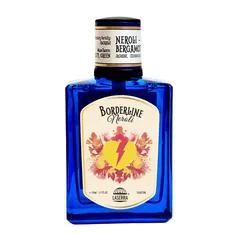
La Serra Borderline Neroli — Parfum 50ml
Opens with neroli, Calabrian bergamot and fig, then settles on sandalwood, vanilla and cedar. A clear example of a fresh scent that does not end with its citrus, because the base carries the light through the day.
Floral: the first language of gifting
White florals such as tuberose, jasmine and orange blossom are among the most gifted scents in the Gulf, with an elegance everyone understands. In the wardrobe they are for daytime occasions and family gatherings.
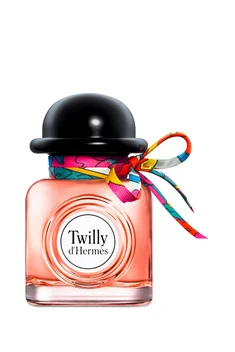
Hermès Twilly d'Hermès — Eau de Parfum 85ml
Tuberose, orange blossom and jasmine at the heart, with ginger and bitter orange up top to keep the sweetness light. A youthful floral and a gift that always lands well.
Skin musk: the layer nobody sees
Musk is among the least volatile materials, so it lives in the base and stays close to the skin. It plays two parts: a quiet scent for close settings, and a base layer sprayed under another perfume to extend its presence.
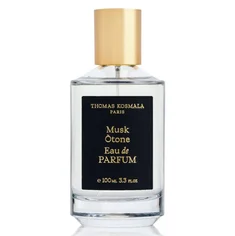
Thomas Kosmala Musk Ōtone — Eau de Parfum 100ml
A clean, skin-close musk with touches of iris, gardenia, sandalwood and vanilla. Wear it alone for quiet intimacy, or as a foundation for anything else in your wardrobe.
Gulf heat rearranges your wardrobe
How fast each note appears is governed by physics. A review in the journal Molecules explains that the amount of a perfume ingredient reaching your nose from the air rises with its vapour pressure (how readily it turns into vapour) and with temperature [4]. The review gives rough estimates: top notes last about 15–30 minutes on skin, the heart about 3–4 hours, and the base more than 4 hours [4].
In the Gulf, heat speeds up evaporation across the whole perfume, so the opening passes faster and projection is stronger early on. Summer calls for fresh, light scents and fewer sprays, while the cooler months from October to April let heavy perfumes unfold slowly: amber, vanilla, woods and oud. A complete wardrobe gives every season its own shelf.
That heat never reaches your perfume before you do. Loja ships every order with thermal insulation for the whole journey, so the bottle arrives as it left the house, and heat becomes something you control: which scent you choose for which season, and how many sprays.
Woody: confident presence with the first cool evening
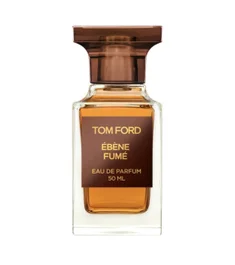
Tom Ford Ébène Fumé — Eau de Parfum 50ml
Incense, palo santo and black pepper, then leather and labdanum over ebony and guaiac wood. A smoky woody that recalls the incense burner and needs winter air to unfold.
Warm amber: the evening scent
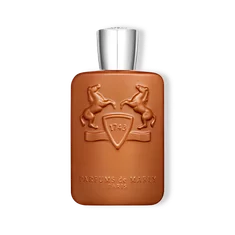
Parfums de Marly Althaïr — Eau de Parfum 200ml
Cinnamon, cardamom and orange blossom, then Bourbon vanilla and elemi, on praline, candied almond, tonka and guaiac wood. Sweet oriental warmth made for winter nights and dinners.
Oud: the heart of a Gulf wardrobe
No Gulf wardrobe is complete without oud. If you read our article on the chemistry of oud, you know its precious scent begins with a wound in the tree. Modern perfumery often pairs it with incense, saffron and woods for a contemporary taste.
Perris Monte Carlo Oud Imperial — Eau de Parfum 100ml
Oud at the heart with incense and saffron, opened by caraway and jasmine, on labdanum, sandalwood and blackwood. A regal oud for Fridays and big occasions.
Your nose is not anyone else's
It sounds like a figure of speech, but it is a finding published in Nature. Researchers at Rockefeller University and Duke University studied the molecule androstenone: some people smell it as sweaty and unpleasant, others as sweet and floral, and some cannot smell it at all. The difference was linked to genetic variation in a single odorant receptor, OR7D4 [5].
Did you know?
A small variation in the gene for one smell receptor was enough to make the same molecule unpleasant to one person, sweet to another and odourless to a third [5].
So do not buy a perfume only because everyone praises it. What matters is that it moves you.
The lesson for your wardrobe is simple: popular opinion is a starting point, not a verdict. Try a perfume on your own skin, live with it for a full day, then decide. A wardrobe built around your nose is worth more than one built around trends.
Scent is memory: why every chapter deserves its own perfume
Smell has a direct line to the brain's centres of emotion and learning. In a review in Brain Sciences, researcher Rachel Herz summarises years of experiments: memories triggered by a scent feel more emotional than those triggered by an image or a word, transport people more strongly back to the original time and place, and tend to come from the earliest years of life [6].
That changes how you think about a wardrobe. When you reserve one scent for Fridays, another for travel and a third for wedding season, you are not only adding variety. You are building an archive of memories your nose can reopen years later with a single spray. Wear the same perfume everywhere and every memory ends up in one bottle.
Does your wardrobe go off on the shelf?
It is the question every collector asks: do the bottles I rarely wear spoil? Limonene, the citrus ingredient common in perfumes, is known to oxidise with prolonged exposure to air. Yet a study in the Flavour and Fragrance Journal analysed eaux de toilette in half-empty bottles opened repeatedly and stored for nine months, along with aged perfumes collected from real consumers, and found no evidence of significant limonene oxidation in them [7].
Did you know?
The aged perfumes collected from consumers in that study still contained limonene at an average of about 1,990 micrograms per gram [7].
A well-made alcohol-based perfume is more resilient than many people think.
That is reassuring for anyone building a wardrobe slowly, and the riskiest part of a perfume's journey in a Gulf summer, shipping, is handled by Loja's thermal insulation. What is left for you at home is simple: keep caps tight and store bottles in their boxes away from sun and heat, because heat speeds up everything that happens inside a perfume.
How to start your wardrobe: a three-stage plan
- Stage one — the three pillars: a fresh daytime scent for work and heat, a warm amber or woody scent for evenings and winter, and a skin musk for close wear and layering. These three cover most of your day and give your nose the variety that protects it from adaptation.
- Stage two — breadth: add a floral for daytime occasions and gifting, and a woody if you started with amber (or the reverse). Now every season and moment has its shelf.
- Stage three — depth: an oud for Fridays and big occasions, then your signature: the scent you choose because it feels like you, not because it is everywhere.
- The rule for every new bottle: ask which empty corner of the map it fills. If it repeats a perfume you own, it is an extra bottle, not a new scent.
The expansion ladder: from designer to independent artistic houses
After the roles comes depth. Perfume lovers usually climb five steps, each one training the nose for the next. You do not need to hunt for them in different places: all five steps are available at Loja.
- 1. Designer: the great fashion houses such as Hermès, Dior, Chanel and Gucci. Polished, familiar compositions and the best first school for learning the fragrance families.
- 2. Accessible niche: fragrance-only houses such as Parfums de Marly, Initio and BDK Parfums. More presence and richer materials, with a spirit close enough to designer to make the step feel natural.
- 3. Complex and rare niche: houses such as Memo Paris and Ybry Paris, with bolder compositions and layers that reward a trained nose. This is where a perfume starts telling a story only those who walked the road can read.
- 4. Limited and crafted pieces: limited editions and exclusive lines such as Chanel's Les Exclusifs and Dior's La Collection Privée. Pieces collected for rarity as much as worn.
- 5. Independent artistic houses: perfumers working with full creative freedom, such as Thomas Kosmala, La Serra and Matière Première. Scents that carry their creator's signature, and often where a perfume lover finds their own.
Why build your wardrobe with Loja?
Because a wardrobe is built over years, and every bottle in it must be authentic. Loja sells only original perfumes from the world's designer and niche houses, brings all five steps together in one store, at a lower cost to you, and packs every order to protect the perfume all the way to your door. There is no reason to miss a single step of the road.
Frequently asked questions
How many perfumes does a complete fragrance wardrobe need?
There is no magic number. Three perfumes from different families make a strong start, and seven roles cover most seasons and occasions. Variety of families matters more than the number of bottles.
Why can't I smell my perfume when others can?
Olfactory adaptation: the nose lowers its sensitivity to an odour it is constantly exposed to, and sensitivity returns once exposure stops [1]. Rotating between different perfumes brings your favourite back.
Do I need different perfumes for summer and winter in the Gulf?
Ideally, yes. Heat speeds up the evaporation of perfume ingredients [4], so summer suits fresh, light scents with fewer sprays, while winter suits amber, vanilla, woods and oud.
Do perfumes spoil in long storage?
In a study of perfumes opened repeatedly and stored for nine months, there was no evidence of significant oxidation of limonene [7]. Still, keep them closed and away from sun and heat.
Where should I start buying my fragrance wardrobe?
From a source that guarantees every bottle is authentic. At Loja you will find original perfumes across all five steps, from designer to independent artistic houses, at a lower cost to you and shipped with thermal insulation.
The takeaway
One perfume fades in your nose however much you love it, Gulf heat changes its character from season to season, and your memory needs a scent for every story. A complete fragrance wardrobe is the road that keeps each perfume's first magic alive.
Start with the three pillars, then climb the expansion ladder one step at a time. Everything you need on the road, from designer to independent artistic houses, is authentic and available at Loja.
Sources
- Dalton, P. (2000). Psychophysical and Behavioral Characteristics of Olfactory Adaptation. Chemical Senses, 25(4) — https://academic.oup.com/chemse/article-abstract/25/4/487/342753
- Ferdenzi, C., Poncelet, J., Rouby, C., Bensafi, M. (2014). Repeated exposure to odors induces affective habituation of perception and sniffing. Frontiers in Behavioral Neuroscience — https://pmc.ncbi.nlm.nih.gov/articles/PMC3989720/
- Perfumery Radar: A Predictive Tool for Perfume Family Classification. Industrial & Engineering Chemistry Research (ACS), 2010 — https://pubs.acs.org/doi/abs/10.1021/ie101161v
- Rodrigues, A. E., Nogueira, I., Faria, R. P. V. (2021). Perfume and Flavor Engineering: A Chemical Engineering Perspective. Molecules, 26(11) — https://www.mdpi.com/1420-3049/26/11/3095
- Keller, A., Zhuang, H., Chi, Q., Vosshall, L. B., Matsunami, H. (2007). Genetic variation in a human odorant receptor alters odour perception. Nature, 449 — https://www.nature.com/articles/nature06162
- Herz, R. S. (2016). The Role of Odor-Evoked Memory in Psychological and Physiological Health. Brain Sciences, 6(3) — https://www.mdpi.com/2076-3425/6/3/22
- Kern, S. et al. (2014). Stability of limonene and monitoring of a hydroperoxide in fragranced products. Flavour and Fragrance Journal — https://onlinelibrary.wiley.com/doi/10.1002/ffj.3210